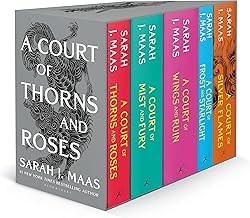
In the sprawling landscape of modern fantasy literature, few sequels have managed to capture readers' imaginations and fundamentally shift a series' trajectory as powerfully as A Court of Mist and Fury. Sarah J. Maas's second installment in the beloved A Court of Thorns and Roses series didn't just continue a story; it expanded a universe, deepened its characters beyond recognition, and set a new benchmark for emotional depth in the fantasy romance genre. For many fans, this is the book where the series truly found its voice and its heart.
Moving beyond the Beauty and the Beast framework of the first novel, A Court Of Mist And Fury plunges Feyre Archeron into a world of political intrigue, devastating trauma, and a slow-burn romance that has become legendary. It's a masterclass in character-driven storytelling, where the protagonist's internal journey is just as epic as the external threats facing the faerie courts. This article explores why this particular volume resonates so profoundly, examining its themes, its controversial choices, and its undeniable role in cementing Sarah J. Maas's status as a titan of new adult fantasy.
The Transformational Arc of Feyre Archeron
At the end of A Court of Thorns and Roses, Feyre is a survivor, but she is broken. A Court of Mist and Fury begins not with a victory lap, but in the thick of debilitating PTSD. Maas does not shy away from depicting the brutal psychological aftermath of Feyre's trials Under the Mountain. Her nightmares, her detachment from the Spring Court life she supposedly won, and her strained relationship with Tamlin form the poignant, uncomfortable foundation of the book's first act.
This raw portrayal of trauma is what makes Feyre's subsequent growth so earned and satisfying. Her journey is not about becoming a warrior in the physical sense—though that happens too—but about reclaiming her agency. She learns to read, negotiates with powerful High Lords, and makes strategic decisions. The Feyre who emerges is not just Tamlin's bride or a human-turned-Fae; she is a political player, a friend, and a woman discovering her own immense power and worth independent of any romantic relationship. This evolution is the core emotional engine of the novel and a significant reason readers connect with this story on such a deep level.
Rhysand: The Game-Changer of the Night Court
If Feyre's transformation is the heart of the book, the recontextualization of Rhysand, High Lord of the Night Court, is its soul. Vilified in the first book as a morally ambiguous antagonist, A Court of Mist and Fury meticulously peels back his layers. Through the novel's brilliant narrative device of the mating bond and their mental connection, we see the man behind the mask: a ruler burdened by centuries of guilt, fiercely protective of his found family, and willing to be perceived as a monster to protect his people.
Rhysand's philosophy of choice—"To the people who look at the stars and wish, Rhys. To the stars who listen—and the dreams that are answered"—becomes the thematic antithesis to Tamlin's smothering protection. His relationship with Feyre is built on mutual respect, honesty, and the unwavering belief in her strength. This dynamic didn't just create one of the most beloved couples in modern fantasy; it sparked endless discussion and analysis within the fandom, solidifying the book's status as a cornerstone of fae romance.
Thematic Depth: Trauma, Healing, and Found Family
Beyond the romance, A Court Of Mist And Fury is a profound exploration of healing. It contrasts two forms of coping: Tamlin's attempt to lock away the past (and Feyre) in a gilded cage, and the Night Court's method of facing darkness with support and understanding. The introduction of the Inner Circle—Amren, Mor, Cassian, and Azriel—provides a blueprint for found family. They don't coddle Feyre; they challenge her, train her, and accept her without judgment, offering a community that facilitates her recovery.
This theme extends to the world-building. The Night Court itself, especially the vibrant city of Velaris, the "City of Starlight," symbolizes a hidden place of beauty and safety amidst a reputation for terror. It reinforces the book's central message: that people and places are rarely what they seem, and true strength often lies in vulnerability and connection, not in isolation and control.
Expanding the World: From Spring to a Whole New World
Maas uses the sequel's scope to explode the world-building beyond the confines of the Spring Court. Readers are introduced to the seasonal and solar courts, each with distinct cultures, politics, and dangers. The looming threat of the King of Hybern and the fragile state of the Cauldron raise the stakes from personal survival to the fate of the entire Fae realm.
This expansion is critical for the longevity of the Court of Thorns and Roses series. It transforms the narrative from a contained fairy-tale retelling into a sprawling epic with a rich tapestry of locations and factions. The political maneuvering between the High Lords, the history of the Fae, and the revelation of new powers and creatures all serve to create a universe that feels vast, ancient, and ripe for further exploration in subsequent books like A Court of Wings and Ruin.
Cultural Impact and Legacy in the Fantasy Genre
The release of A Court of Mist and Fury was a cultural moment in bookish communities. It dominated bestseller lists, fueled countless fan theories and artworks, and set a new standard for romantic fantasy. Its success proved the immense market for New Adult Fantasy—stories that blend epic world-building with mature emotional and romantic themes.
The book's bold narrative choices, particularly the shifting romantic lead, demonstrated a willingness to subvert reader expectations in service of a more complex character journey. It sparked debates about "book boyfriends," toxic versus healthy relationships, and the portrayal of mental health in fantasy, ensuring its place in reader discussions for years to come. For many, it remains the high point of the ACOTAR series, the book they most frequently recommend to friends diving into Sarah J. Maas's work.
Why A Court of Mist and Fury Endures
Years after its publication, the fervor for this sequel has not dimmed. Its endurance lies in its perfect storm of elements: a relatable and powerful heroine's journey, a revolutionary romantic arc, the irresistible appeal of the found family trope, and world-building that leaves readers craving more. It delivers on the fantasy promise of escape while grounding its story in authentic emotional struggles.
For readers who experienced the shock of its twists and the depth of its relationships firsthand, A Court Of Mist And Fury is more than a book; it's an experience. It represents a turning point where a popular series transformed into a bestselling fantasy series phenomenon. Whether you're a longtime fan revisiting Velaris or a new reader about to experience the magic for the first time, this sequel stands as a testament to the power of storytelling to surprise, heal, and utterly captivate.