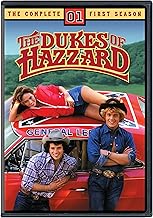
For a generation of television viewers, the sound of a roaring V8 engine and the flash of a bright orange 1969 Dodge Charger leaping over a dirt road defined Friday nights. The Dukes of Hazzard wasn't just a show; it was a weekly dose of Southern-fried adventure, family loyalty, and car chases that defied physics. Premiering in 1979, this CBS series captured the hearts of millions with its simple premise: two good-ol' boy cousins, Bo and Luke Duke, constantly outwitting the corrupt county commissioner Boss Hogg and his bumbling sheriff, Rosco P. Coltrane, in the fictional Hazzard County, Georgia. The show's unique blend of action, comedy, and heart made it a cornerstone of 1980s pop culture, and its legacy, particularly that of the iconic General Lee car, continues to resonate with fans and collectors worldwide.
The Unforgettable Characters of Hazzard County
The soul of The Dukes of Hazzard lay in its charismatic cast of characters. At the center were cousins Bo Duke (John Schneider) and Luke Duke (Tom Wopat). With their denim jackets, tight jeans, and unwavering moral code, they were the epitome of cool for a young audience. Their mission was simple: protect their family's farm and the people of Hazzard from the greedy schemes of Jefferson Davis "Boss" Hogg (Sorrell Booke). Boss Hogg, with his white suit and perpetual frustration, was the perfect comic villain, whose plans were always foiled by the Duke boys' cleverness and driving skills.
Rounding out the core cast was their wise and beautiful cousin, Daisy Duke (Catherine Bach), whose incredibly short denim shorts—forever immortalized as "Daisy Dukes"—became a cultural icon in their own right. Providing the musical narration and homespun wisdom was Uncle Jesse Denver Pyle), the patriarch who kept the boys in line. And who could forget Sheriff Rosco P. Coltrane (James Best) and his basset hound Flash? Rosco's "Koo-koo-ka-choo!" catchphrase and wildly incompetent pursuits provided endless laughs. This ensemble created a dynamic that was both hilarious and endearing, making viewers feel like honorary citizens of Hazzard County.
The Real Star: The 1969 Dodge Charger "General Lee"
While the actors were beloved, the undeniable star of the show was the General Lee. This bright orange 1969 Dodge Charger, with its Confederate battle flag roof (a controversial element re-evaluated in modern contexts) and the horn that blared the opening notes of "Dixie," was more than a car—it was a character. It was Bo and Luke's trusty steed, capable of impossible jumps, tight turns, and outrunning any of Boss Hogg's patrol cars. The show's legendary car stunts, orchestrated by legendary stunt coordinator Jack Gill, became its signature. It's estimated that over 300 General Lee Chargers were used and destroyed during the series' run, each jump carefully calculated but no less thrilling to watch.
The General Lee transcended the show to become a global symbol of rebellion and automotive prowess. Its popularity sparked a massive market for model cars, toys, and memorabilia. Today, surviving screen-used General Lees are among the most sought-after pieces of television history, fetching high prices at auctions. For many fans, the roar of its Hemi engine is the sound of pure, unadulterated adventure. The car's design is so iconic that it remains instantly recognizable, a testament to the show's powerful visual legacy. Enthusiasts can explore more about this automotive legend and other pop culture phenomena in our dedicated Dukes of Hazzard collection.
Behind the Scenes: Production Challenges and Changes
The road for the Duke boys wasn't always smooth behind the camera. In 1982, during the height of the show's popularity, stars John Schneider and Tom Wopat walked out in a contract dispute over merchandising royalties, particularly related to the massive General Lee toy sales. This led to one of the most bizarre seasons in TV history, where Bo and Luke were "away on the NASCAR circuit" and were replaced by cousins Coy and Vance Duke. Unsurprisingly, fans rejected the replacements, and ratings suffered, forcing a renegotiation that brought Schneider and Wopat back for the following season.
Furthermore, the show's signature car stunts, while spectacular, were incredibly dangerous and expensive. Stunt drivers performed incredible feats, and the production team became experts at building ramps and rigging cars for flight. The sheer number of Chargers destroyed led to a nationwide hunt for 1968-1970 models, driving up prices and scarcity. These behind-the-scenes dramas added a layer of real-world tension to the lighthearted show, highlighting the complex business and logistical realities of creating such a stunt-heavy series.
Cultural Impact and Lasting Legacy
The impact of The Dukes of Hazzard on popular culture is profound and multifaceted. It cemented the "good ol' boys" archetype in the American consciousness. It made car stunts a prime-time staple, influencing countless action movies and shows that followed. Phrases like "Daisy Dukes" entered the common lexicon. The show also had a significant impact on country music, with its theme song "Good Ol' Boys" performed by Waylon Jennings, who also served as the show's balladeer. Jennings' narration gave the show a folksy, storybook quality that set it apart from other action series.
However, the legacy is not without its modern controversies. The prominent use of the Confederate flag on the General Lee's roof has been the subject of intense debate and reassessment. In recent years, this has led to merchandise being pulled from shelves and episodes being edited or accompanied by disclaimers on streaming services. This ongoing conversation reflects how cultural artifacts are re-examined through evolving social lenses. Despite this, the core appeal of the show—the underdog family fighting corruption with wit and horsepower—remains powerful for a dedicated fanbase that celebrates the stunts, the camaraderie, and the sheer fun of it all.
Why The Dukes of Hazzard Still Matters Today
Decades after its final episode aired in 1985, The Dukes of Hazzard endures. It represents a specific, nostalgic vision of Americana: rural life, family bonds, and standing up for what's right. In an era of complex, serialized television, the show's episodic, problem-of-the-week format offers simple, satisfying entertainment. The stunt work, performed largely without CGI, retains a tangible, thrilling quality that digital effects often lack. For automotive enthusiasts, it's a glorious celebration of American muscle car culture.
The show also spawned TV reunions, a 2005 feature film (starring Johnny Knoxville and Jessica Simpson), and a vast universe of collectibles. Conventions still draw thousands of fans eager to meet the cast, see replica General Lees, and share memories. It serves as a cultural touchstone for discussions about television history, fandom, and how we reinterpret entertainment from different eras. Whether you're a longtime fan revisiting Hazzard County or a newcomer discovering the jumps for the first time, the adventures of Bo, Luke, Daisy, and Uncle Jesse offer a timeless, high-octane escape. Dive deeper into this iconic world and discover related memorabilia by exploring our Dukes of Hazzard archive.