If you've ever marveled at the perfectly uniform slices of vegetables in a restaurant or a cooking show, chances are a mandoline slicer was the secret tool behind that culinary precision. This versatile kitchen gadget is a game-changer for home cooks and professional chefs alike, transforming tedious chopping into a quick, efficient, and consistent process. Whether you're preparing a mountain of potatoes for gratin, thinly slicing cucumbers for a salad, or creating delicate waffle cuts for chips, a mandoline slicer delivers results that are difficult to achieve with a knife alone.
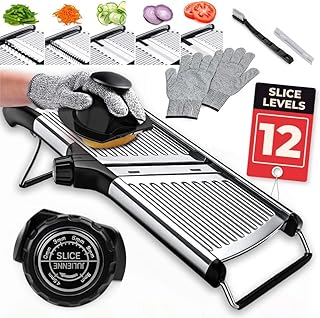
In this comprehensive guide, we'll dive deep into the world of mandoline slicers. We'll explore the different types available, key features to look for, and most importantly, how to use this powerful tool safely to avoid the all-too-common 'mandoline mishap.' We'll also highlight specific products that exemplify these features, such as the Gramercy Adjustable Mandoline Food Slicer, which is designed with both performance and safety in mind, including essential cut-resistant gloves.
What is a Mandoline Slicer and Why Do You Need One?
A mandoline slicer is a manual kitchen utensil used for slicing and cutting fruits and vegetables to a consistent thickness. It typically consists of a flat, stable body with an adjustable blade platform. Food is passed over a sharp blade, producing slices, juliennes, or waffle cuts with remarkable uniformity. This consistency is not just about aesthetics; it ensures even cooking, which is crucial for dishes like scalloped potatoes, vegetable tarts, or homemade potato chips.
The primary benefits of owning a kitchen mandoline are speed, precision, and versatility. What might take 10 minutes of careful knife work can be accomplished in under a minute. For meal preppers, this is an invaluable time-saver. Furthermore, the ability to adjust the thickness allows for incredible culinary creativity, from paper-thin slices for carpaccio to thicker cuts for stews.
Key Features to Look for in a Quality Mandoline Slicer
Not all mandoline slicers are created equal. When shopping for one, several features distinguish a good, safe, and durable model from a frustrating or dangerous one.
Adjustable Thickness Settings
The hallmark of a versatile adjustable mandoline is a reliable and easy-to-use thickness dial. Look for a model that offers a clear range, typically from 0.5mm to 8mm or more, with secure locking mechanisms at each setting. This feature allows you to switch from wafer-thin radishes for a salad to thick-cut sweet potatoes for fries without needing multiple tools.
Blade Material and Construction
Blade quality is paramount. High-carbon stainless steel blades are preferred for their sharpness, durability, and resistance to rust and corrosion. The blades should be firmly mounted to the body to prevent wobbling, which can lead to uneven cuts and increased safety risks. Some models come with interchangeable blades for different cut styles (straight, wavy, julienne).
Safety Features: The Non-Negotiables
Safety is the most critical aspect of using a mandoline. The two essential safety features are a hand guard and cut-resistant gloves. A good hand guard allows you to hold the food securely while keeping your fingers well away from the blade. However, a hand guard alone isn't foolproof. That's why the inclusion of a pair of cut-resistant gloves, like those included with the Gramercy Adjustable Mandoline, is a significant advantage. These gloves provide an extra layer of protection for your hands and fingers, offering peace of mind, especially when slicing the last bits of a potato or onion.
Stability and Ease of Cleaning
A mandoline needs a stable, non-slip base to prevent it from sliding around on your counter while in use. Look for models with rubberized feet. Additionally, consider how easy it is to clean. Many parts, especially the blades, should be dishwasher safe, but often, a quick rinse under the tap is sufficient. Removable blades make cleaning safer and more thorough.
How to Use a Mandoline Slicer Safely: A Step-by-Step Guide
Respect for the blade is the first rule of mandoline safety. Follow these steps to ensure a safe and successful slicing session.
1. Assemble Your Safety Gear: Before you even pick up a vegetable, put on your cut-resistant gloves. This should be an automatic step, like putting on an oven mitt.
2. Secure the Mandoline: Place the mandoline on a flat, stable surface. Ensure the rubber feet are clean and dry to maximize grip.
3. Adjust the Thickness: Select your desired thickness using the adjustment dial. Always start with a thicker setting if you're unsure, and test on a small piece of food.
4. Prepare Your Food: Wash and peel your vegetables or fruits as needed. For stability, create a flat base by cutting a small slice off one end of round produce like potatoes or onions. This is a crucial tip for any onion cutter technique.
5. Use the Hand Guard: Impale the food onto the hand guard's spikes. Apply firm, even pressure and slide the food back and forth over the blade in a smooth motion. Never, ever use your bare hand to push food through.
6. Handle the Last Piece: When you get to the last small piece of food, it's tempting to use your fingers. Don't. Either use the hand guard carefully or consider that last bit a 'chef's snack' and discard it. Your gloves are there for extra protection, but they are not an invitation to take risks.
7. Clean Immediately and Carefully: Disassemble the mandoline according to the manufacturer's instructions. Clean the blades with extreme caution, using a brush rather than a sponge or your fingers. Many cuts happen during cleaning.
Exploring the Versatility: What Can You Make with a Mandoline Slicer?
The applications for a mandoline slicer go far beyond simple potato slices. Here are some creative ways to use your vegetable slicer:
Perfect Potato Chips and Fries: Achieve restaurant-quality, uniformly thin potato chips for frying or baking. Use the julienne blade for perfect, matchstick-style fries.
Elegant Vegetable Platters: Create beautiful, translucent slices of cucumber, radish, and beetroot for crudité platters or canapés.
Effortless Gratin and Casseroles: The key to a perfect gratin Dauphinoise is uniformly thin potato slices that cook evenly. A mandoline makes this task effortless.
Quick-Pickled Vegetables: Thinly sliced onions, carrots, and cucumbers pickle faster and more evenly, absorbing flavors in a fraction of the time.
Homemade Vegetable Noodles: Use the julienne blade to turn zucchini, carrots, or sweet potatoes into 'zoodles' and other healthy pasta alternatives.
Choosing the Right Mandoline for Your Kitchen: Product Spotlight
With so many options on the market, it helps to see how these features come together in a real product. A model like the Gramercy Adjustable Mandoline Food Slicer incorporates many of the ideal features we've discussed. It boasts an adjustable stainless steel blade for precision slicing, a stable base, and critically, it includes a pair of cut-resistant gloves right in the box. This proactive approach to safety addresses the number one concern users have with mandolines. Its design as a comprehensive food slicer kit means you have everything you need to start slicing safely and effectively from day one, making it a strong contender for both beginners and experienced cooks looking for a reliable tool.
Maintenance and Care for Longevity
To keep your mandoline slicer performing at its best for years, proper care is essential. Always hand-wash the blades and dry them immediately to prevent water spots and corrosion, even if they are labeled dishwasher safe. Store the mandoline with the blade guard on, or in a dedicated container, to protect the sharp edges and prevent accidental cuts when reaching into a drawer. Periodically check that all screws and adjustment mechanisms are tight. A well-maintained mandoline slicer is not only safer but also provides consistently better results.
Conclusion: Slice with Confidence
A mandoline slicer is an investment that pays off in saved time, improved culinary results, and expanded kitchen creativity. The key to enjoying all these benefits lies in choosing a well-made tool with robust safety features and committing to safe usage practices every single time. By prioritizing models that include non-slip bases, secure hand guards, and essential cut-resistant gloves, you can mitigate the risks and focus on the joy of creating beautifully prepared food. Whether you opt for a comprehensive kit or a basic model, remember that respect for the tool and consistent safety habits will ensure your mandoline remains a beloved helper in your kitchen for countless meals to come.


