Hunter S. Thompson's Fear and Loathing in Las Vegas is more than a novel; it's a cultural detonation. First serialized in Rolling Stone in 1971, this blistering account of a drug-fueled trip to Las Vegas to cover a motorcycle race—and later, a district attorneys' convention on narcotics—redefined the boundaries of journalism and literature. The book, particularly in editions like the Modern Library collection, packages this raw energy with other essential American stories, offering a definitive portal into Thompson's unique mind. This guide delves into the heart of the book, exploring its creation, its seismic impact on gonzo journalism, and its enduring status as a counterculture classic.
The Birth of Gonzo: More Than Just Journalism
To understand Fear and Loathing in Las Vegas, one must first understand gonzo. Thompson didn't just report the news; he immersed himself in the story, becoming its central, often chaotic, protagonist. Objectivity was thrown out the window of a speeding red convertible. Instead, Thompson offered a subjective, amplified, and brutally honest truth—a truth filtered through paranoia, substance abuse, and a profound disgust for the American Dream. The Las Vegas of the book is not the real city, but a grotesque funhouse mirror reflecting the nation's own decay, greed, and hypocrisy. This method, born from a desperate deadline and a profound creative spark, became his signature. As a pillar of 20th-century literature, the work challenges readers to question not only the narrative but the very nature of truth-telling.
Decoding the Characters: Raoul Duke and Dr. Gonzo
The journey is helmed by two unforgettable alter-egos: Raoul Duke (Thompson's fictionalized self) and his 300-pound Samoan attorney, Dr. Gonzo. Duke is the paranoid observer, a journalist so deep in the madness he can barely take notes. Dr. Gonzo is the id unleashed, a force of primal chaos and legal (and illegal) maneuvering. Their dynamic is the engine of the story. They are not heroes but anarchic pilgrims searching for the American Dream in the neon desert, only to find it rotting. Their escapades—from the Bazooko's Circus casino to the Mint Hotel—are hilarious, terrifying, and deeply symbolic. The Modern Library edition allows readers to trace the evolution of Thompson's voice from this landmark work to his other sharp societal critiques.
Timeless Themes: The Death of the American Dream
Beneath the layers of drug humor and surreal imagery lies a deeply serious and angry book. Thompson was documenting what he called "the death of the American Dream." The setting of Las Vegas, a city built on illusion and loss, is perfect for this autopsy. The 1960s counterculture had promised a revolution, but by the dawn of the 70s, Thompson saw it being co-opted, sold out, and defeated by the very forces of corruption and banality it sought to overthrow. The famous "wave speech"—where Thompson describes the high-water mark of the 60s—is one of the most poignant passages in modern American writing. It's this bitter heart that elevates the book from a mere comedy of excess to a vital historical document and a bestseller that continues to resonate.
The Modern Library Edition: A Curated Thompson Experience
For newcomers and seasoned fans alike, the Fear and Loathing in Las Vegas and Other American Stories from Modern Library presents an ideal package. It doesn't just offer the main event; it provides crucial context. By including other seminal pieces like "The Kentucky Derby Is Decadent and Depraved" (often considered the first true gonzo article) and "Fear and Loathing on the Campaign Trail '72" excerpts, the collection maps the full terrain of Thompson's Hunter S. Thompson genius. Readers can see the gonzo style being forged and then applied to the pinnacle of American politics. This curated approach makes it more than a book; it's a study of a literary revolution.
Cultural Impact and Lasting Legacy
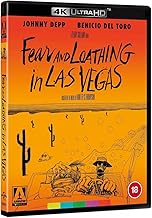
The influence of Fear and Loathing is immeasurable. It inspired a generation of journalists to embrace voice and subjectivity. Its aesthetic permeates film, music, and fashion. The 1998 film adaptation by Terry Gilliam, starring Johnny Depp and Benicio del Toro, became a cult classic in its own right, visually capturing the book's hallucinogenic frenzy. Phrases like "buy the ticket, take the ride" have entered the lexicon. The book remains a rite of passage, a warning, and a rallying cry. It asks uncomfortable questions about freedom, authenticity, and the cost of chasing illusions—questions that are perhaps more relevant today than ever.
Why This Counterculture Classic Still Matters
In an age of curated social media personas and manufactured news, Thompson's unflinching, messy, and deeply personal brand of truth-telling feels radically necessary. Fear and Loathing in Las Vegas teaches us to be skeptical of official narratives, to seek the ugly truth behind the glossy facade, and to understand that sometimes the most accurate report comes from the eye of the storm, not from a safe distance. It is a masterpiece of American stories, not because it tells a story we admire, but because it tells a story about ourselves we often try to ignore. The Modern Library collection is the perfect vessel for this enduring, dangerous, and essential piece of work.

![Fear and Loathing in Las Vegas [DVD]](https://m.media-amazon.com/images/I/91RZMbnPpyL._AC_UY218_.jpg)
![Fear and Loathing in Las Vegas (The Criterion Collection) [4K UHD]](https://m.media-amazon.com/images/I/815Dxqc0X7L._AC_UY218_.jpg)
![Fear and Loathing in Las Vegas [Blu-ray]](https://m.media-amazon.com/images/I/71kZZqdD57L._AC_UY218_.jpg)
![Fear and Loathing in Las Vegas (The Criterion Collection) [Blu-ray]](https://m.media-amazon.com/images/I/81h7QOrWU6L._AC_UY218_.jpg)