
Sarah J. Maas's A Court of Wings and Ruin stands as a monumental achievement in modern fantasy literature. As the third and pivotal installment in the beloved A Court of Thorns and Roses series, this novel delivers on the immense promise of its predecessors, weaving a tale of war, political intrigue, and profound personal transformation. For fans who have journeyed with Feyre Archeron from a mortal huntress to the High Lady of the Night Court, this book is the explosive payoff they've been waiting for. The stakes have never been higher, and Maas proves she is a master of epic-scale storytelling that remains deeply rooted in character.
The narrative thrust of A Court of Wings and Ruin is relentless. Picking up directly after the cliffhanger of A Court of Mist and Fury, Feyre returns to the Spring Court under the guise of a broken captive, but in reality, she is a spy for the Night Court, gathering intelligence on the manipulative Tamlin and the looming threat of the King of Hybern. This section of the book is a masterclass in tension, showcasing Feyre's growth into a cunning and strategic player in the deadly game of courts. Her internal conflict—balancing her love for Rhysand and her family with the necessary deceptions—adds rich emotional depth to the high-stakes espionage.
One of the novel's greatest strengths is its expansive and nuanced exploration of its ensemble cast. While Feyre remains the compelling heart of the story, Maas dedicates significant time to developing characters like Nesta, Elain, Cassian, Azriel, and Mor. Nesta's arc, in particular, is a standout, portraying a woman grappling with trauma, power, and a fierce, often destructive, independence. The dynamics within the Inner Circle of the Night Court are tested and solidified, moving beyond simple camaraderie to explore the complex bonds of found family. This character work ensures that the impending war feels personal; readers are invested not just in the fate of Prythian, but in the survival and happiness of each individual.
Thematically, A Court of Wings and Ruin is Maas's most ambitious work in the series. It delves deeply into the costs of war, the moral gray areas of leadership, and the nature of sacrifice. The alliance-building across the seven courts of Prythian is a fascinating study in politics and persuasion, highlighting that the greatest battles are often won before the first sword is drawn. The book doesn't shy away from depicting the brutal realities of conflict—the loss, the trauma, the impossible choices leaders must make. Yet, intertwined with this darkness are powerful themes of hope, healing, and the redemptive power of love and friendship.
Maas's world-building reaches its zenith in this installment. The mythology of the Fae, the history of the courts, and the looming threat from the continent are all expanded upon in satisfying detail. The introduction of new characters, such as the mysterious human queen and the powerful Bone Carver, adds layers to the lore. The magic system, particularly the intricacies of the High Lords' powers and the Cauldron's world-altering abilities, is explored with greater complexity, making the climactic sequences both awe-inspiring and coherent.
Of course, the central romance between Feyre and Rhysand continues to be a major draw. Their relationship, built on a foundation of mutual respect, equality, and unwavering support, is put through the ultimate test by war. Their scenes together provide necessary moments of warmth and vulnerability amidst the chaos, reinforcing the series' core message that true strength is found in partnership, not in domination. Their partnership as High Lady and High Lord is revolutionary in the world of Prythian and serves as a beacon of the new order they are fighting to create.
The final act of the novel—the great battle against the King of Hybern—is a tour de force of fantasy action. Maas manages a sprawling cast and multiple fronts of conflict with impressive clarity. The sequence is emotionally charged, heartbreaking, and ultimately triumphant in a way that feels earned. The sacrifices made are significant, and the victory is bittersweet, leaving lasting consequences for all the characters. This refusal to offer a clean, easy resolution adds tremendous weight and realism to the narrative.
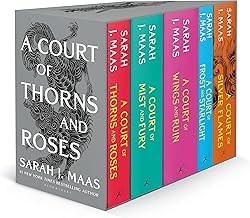
For readers new to the series, A Court of Wings and Ruin is not a standalone novel. Its power is derived from the deep investment built over the first two books. However, for those who are caught up, it is an immensely satisfying and transformative read. It successfully concludes the primary conflict of the initial trilogy while masterfully setting the stage for the future stories set in this world (which continue with A Court of Frost and Starlight and A Court of Silver Flames).
In conclusion, A Court of Wings and Ruin is a spectacular finale that cements Sarah J. Maas's status as a leading voice in fantasy. It is a book about the price of peace, the resilience of the spirit, and the unbreakable bonds that can forge a better future. It delivers epic battles, swoon-worthy romance, and character development in spades. Whether you're a longtime fan of the A Court of Wings and Ruin series or a fantasy enthusiast looking for a deeply engaging read, this novel is an essential addition to your bookshelf. Its impact resonates long after the final page is turned, a testament to Maas's powerful storytelling.


![A Court of Wings and Ruin (1 of 3) [Dramatized Adaptation]: A Court of Thorns and Roses, Book 3](https://m.media-amazon.com/images/I/81zjqlSE8gL._AC_UY218_.jpg)


