
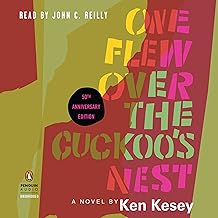
Few novels have burrowed into the cultural consciousness with the ferocity and staying power of Ken Kesey's One Flew Over the Cuckoo's Nest. Published in 1962, its story of Randle P. McMurphy's rebellion against the tyrannical Nurse Ratched within a psychiatric ward transcended its era to become a timeless examination of individuality, sanity, and the mechanisms of control. For new readers and seasoned fans alike, the Penguin Modern Classics edition offers a definitive portal into this world, featuring a provocative foreword by modern literary icon Chuck Palahniuk that bridges the decades between Kesey's riot and today's readers. This article delves into why this particular incarnation of the novel is more than just a book; it's a cultural artifact that continues to spark essential conversations.
The Unshakeable Power of Kesey's Vision
At its heart, One Flew Over the Cuckoo's Nest is a masterclass in narrative perspective and thematic depth. Told through the eyes of Chief Bromden, a patient who pretends to be deaf and dumb, the story gains a layer of profound, fractured subjectivity. We don't just witness the battle between McMurphy's chaotic, life-affirming energy and Ratched's cold, orderly oppression; we experience it through the filter of a man whose perception of the world is shaped by trauma and systemic silencing. This choice elevates the novel from a simple allegory of rebellion to a complex exploration of how reality is constructed and controlled. The struggle in the ward becomes a microcosm for larger societal conflicts—conformity versus nonconformity, the individual versus the institution, and the very definitions of sanity and madness. Engaging with this seminal work is to engage with questions that are as urgent now as they were in the 1960s.
Why the Penguin Modern Classics Edition Stands Apart
Not all editions are created equal. The Penguin Modern Classics series is renowned for its scholarly rigor and beautiful, durable presentation, making it a favorite among collectors and serious readers. This edition of Kesey's novel is particularly significant for its inclusion of Chuck Palahniuk's foreword. Palahniuk, the author of Fight Club, is a direct literary descendant of Kesey's transgressive spirit. His foreword doesn't just offer biographical context; it provides a crucial lens through which to view the novel's contemporary relevance. He connects McMurphy's struggle to modern anxieties about masculinity, consumerism, and therapeutic culture, arguing that the "Combine"—Chief Bromden's term for the oppressive societal machine—has only grown more sophisticated. This pairing of the original text with modern commentary makes this edition an essential bridge, ensuring the novel's themes resonate with a 21st-century audience grappling with new forms of institutional power and personal alienation.
Mental Health Fiction: A Genre Redefined
Kesey's work is often cited as a cornerstone of mental health fiction, but it's crucial to understand its unique position. The novel was groundbreaking for its time, challenging the authoritative, often dehumanizing discourse around psychiatry. However, modern readers should approach it with an awareness of its historical context. Kesey's critique is aimed squarely at the institutional abuse of power and the pathologizing of nonconformity, rather than being a commentary on mental illness itself. The patients in the ward are largely victims of a system, their individual conditions often secondary to the overarching metaphor. This distinction is important for contemporary discussions. Reading the novel today invites us to reflect on how far we've come in our understanding and treatment of mental health, while also recognizing the enduring dangers of systems that prioritize control over care. It remains a powerful, if complicated, entry in the canon of literature that dares to look at the mind and society's attempts to manage it.
American Literature and the Rebel Archetype
One Flew Over the Cuckoo's Nest is firmly entrenched in the grand tradition of American literature. McMurphy is a direct descendant of Huck Finn and a precursor to Tyler Durden—the American rebel who refuses to be "civilized" by a hypocritical or oppressive society. He represents a raw, untamed version of individualism that both inspires and terrifies. The novel sits at a crossroads in American history, capturing the burgeoning counterculture movement's distrust of authority that would define the 1960s. Its exploration of this archetype, however, is not purely celebratory. Kesey is also keenly aware of the cost of such rebellion and the vulnerability of those who champion it. This complexity is what elevates it from a period piece to a permanent fixture in the classic novel category. It asks enduring questions about the price of freedom and the nature of heroism in a world designed to break the spirit.
The Chuck Palahniuk Connection: A Literary Legacy
The decision to have Chuck Palahniuk introduce this edition is a stroke of genius, creating a tangible link between two generations of literary provocateurs. Palahniuk's own work, particularly Fight Club, explores similar themes of emasculated modern men seeking violent, cathartic release from a sterile, consumerist society. In his foreword, Palahniuk doesn't just analyze Kesey; he testifies to the novel's influence on his own writing and worldview. He frames McMurphy not just as a character, but as an idea—a virus of chaos that infects an orderly system. This perspective enriches the reading experience, allowing us to see Kesey's novel as the starting point of a continuing conversation in American letters about alienation and resistance. It underscores the idea that great literature is not static; it evolves and acquires new meanings as it encounters new readers and new cultural moments.
Why This Book Remains a Bestseller
Decades after its publication, One Flew Over the Cuckoo's Nest continues to sell thousands of copies each year, solidifying its status as a perennial bestseller book. Its longevity is a testament to its raw narrative power and its unsettlingly relevant themes. In an age of increasing surveillance, algorithmic control, and debates over personal autonomy versus collective safety, the novel's central conflict feels less like a historical drama and more like a parable for our times. The Penguin Modern Classics edition, with its accessible price and authoritative presentation, is often the version that introduces new generations to this vital story. It's a book that doesn't offer easy answers but instead poses difficult, necessary questions about where the line is between therapy and punishment, between order and oppression, and what it truly means to be free.
A Guide for the Modern Reader
Approaching One Flew Over the Cuckoo's Nest today is a different experience than it was in 1962. Readers are encouraged to hold two ideas in tension: appreciating the novel's monumental achievement in style and social critique, while also applying a critical modern lens to its depictions of psychiatry and character. The key is to see the ward not as a realistic portrayal of mental healthcare, but as a potent metaphor for any system—educational, corporate, governmental—that seeks to crush the human spirit in the name of efficiency and conformity. The edition featuring Palahniuk's foreword is uniquely equipped to guide this reading, providing both context and a contemporary hook. It reminds us that the laughter, rage, and tragedy within its pages are not relics of the past, but ongoing echoes in our present struggle for individuality.
In conclusion, Ken Kesey's masterpiece is far more than a required reading list entry. It is a living, breathing work of art that challenges, provokes, and inspires. The Penguin Modern Classics edition does justice to this legacy, presenting the text in a format worthy of its status and augmenting it with insights that ensure its continued relevance. Whether you are discovering the story of McMurphy and the Chief for the first time or returning to it with fresh eyes, this version promises a rich, unsettling, and ultimately unforgettable journey into the heart of what it means to resist.



![One Flew Over the Cuckoo's Nest [DVD]](https://m.media-amazon.com/images/I/71+hOyY129L._AC_UY218_.jpg)


