
Ken Kesey's One Flew Over the Cuckoo's Nest is more than just a book; it's a cultural touchstone. Published in 1962, this seminal work of classic American novel literature exploded onto the scene, challenging societal norms and offering a searing critique of institutional power. For new readers and seasoned fans alike, navigating the turbulent waters of the psychiatric ward can be a profound experience. This comprehensive guide aims to be your companion, unpacking the novel's complex themes, unforgettable characters, and enduring legacy as a cornerstone of literary fiction.
The Genesis of a Rebellion: Ken Kesey and His Inspiration
To understand the raw power of One Flew Over the Cuckoo's Nest, one must first look at its creator, Ken Kesey. Kesey's own experiences working the night shift at a Veterans' Hospital psychiatric ward in Menlo Park, California, provided the fertile ground for this story. He wasn't just an observer; he volunteered for government-sponsored experiments with psychoactive drugs like LSD and mescaline. These experiences profoundly shaped his perception of reality, sanity, and the mind's potential, themes that pulsate through every page of the novel. The book emerged from the Beat Generation's ethos and foreshadowed the countercultural revolution of the 1960s, making it a definitive rebellion novel.
Unpacking the Ward: Major Themes and Symbolism
Institutional Power vs. Individual Freedom
At its core, the novel is a battle between the oppressive, mechanistic system represented by Nurse Ratched and the chaotic, life-affirming spirit of Randle P. McMurphy. The ward is a microcosm for any system—be it governmental, educational, or societal—that seeks to control, homogenize, and suppress individuality. Kesey masterfully shows how power can be maintained not just through overt force, but through subtle manipulation, shame, and the dismantling of personal will.
Sanity, Insanity, and Society's Labels
One Flew Over the Cuckoo's Nest forces readers to question the very definitions of sanity and madness. Who is truly "insane"? The patients who struggle with their demons, or the "sane" world that created the brutal conditions of the ward and the Vietnam War? The novel is a pioneering work of mental health fiction, portraying mental illness with a complexity rarely seen at the time, challenging stigma and simplistic diagnoses.
The Power of Laughter and Rebellion
McMurphy's primary weapon isn't physical strength; it's laughter, gambling, and irreverence. He demonstrates that joy and defiance are potent forms of resistance against a soul-crushing status quo. His influence re-awakens the other patients' humanity, showing that rebellion can be a therapeutic, necessary act for reclaiming one's self.
Character Deep Dive: Heroes, Villains, and Narrators
Randle P. McMurphy: The Cosmic Trickster
McMurphy enters the ward like a force of nature. A gambler and brawler feigning insanity to avoid prison labor, he represents unadulterated, chaotic freedom. His struggle is not just against Nurse Ratched, but against the patients' own acquiescence. He is the catalyst, but his ultimate sacrifice underscores the high cost of rebellion.
Nurse Ratched: The Tyranny of Order
Nurse Ratched is one of literature's most chilling antagonists precisely because she believes she is helping. Her power lies in her calm, sterile control, using group therapy sessions as tools for humiliation and division. She represents the dehumanizing aspect of institutional care, where efficiency and order trump compassion and healing.
Chief Bromden: The Unseen Observer
The story is narrated through the eyes of Chief Bromden, a Native American patient believed to be deaf and dumb. His unique perspective—shaped by his heritage and personal trauma—allows Kesey to employ powerful metaphors, like the "Combine," a machine-like entity he believes controls society. Bromden's journey from silent observer to liberated individual forms the novel's emotional backbone.
From Page to Icon: The Film Adaptation and Cultural Impact
Milos Forman's 1975 film adaptation, starring Jack Nicholson, is a rarity: a cinematic masterpiece that stands shoulder-to-shoulder with its source material. While it necessarily condenses the story and shifts focus slightly from Bromden to McMurphy, it captured the novel's spirit and introduced Kesey's story to a global audience. Winning all five major Academy Awards, it cemented the story's place in popular culture as a powerful movie tie-in. For many, discovering the original novel after seeing the film reveals deeper layers of symbolism and narrative complexity.
Why It Remains a Must-Read Bestseller
Decades after its publication, One Flew Over the Cuckoo's Nest continues to sell millions of copies and appears on academic syllabi worldwide. Its status as a perennial bestseller book is no accident. The novel's questions about authority, conformity, and the human spirit are timeless. In an era increasingly concerned with systemic critique, mental health awareness, and personal autonomy, Kesey's work feels startlingly relevant. It teaches us to question authority, value individuality, and recognize the humanity in those society labels as "other."
Your Journey into the Cuckoo's Nest: A Reading Companion
Approaching this classic can be daunting. Here are a few tips: Pay close attention to Chief Bromden's narration—his hallucinations and metaphors are key to understanding the novel's deeper meaning. Consider the historical context of the early 1960s. And most importantly, engage with the ethical questions it raises. There are no easy answers in the ward. Whether you are analyzing it for a class or exploring it for personal enrichment, engaging with the text's complexities is a rewarding endeavor.
Finding Your Copy and Further Exploration
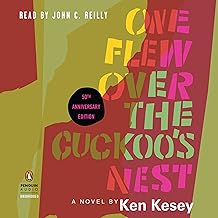
Ready to experience this landmark of American literature? A great edition can enhance your reading. You can find the novel in various formats, including the celebrated 50th Anniversary editions which often contain valuable introductions and essays. To start your journey with Ken Kesey's defining work, consider exploring this classic edition of the novel. Delving into One Flew Over the Cuckoo's Nest is more than reading a book; it's an encounter with a powerful idea that continues to challenge, inspire, and resonate with every generation that discovers it.



![One Flew Over the Cuckoo's Nest [DVD]](https://m.media-amazon.com/images/I/71+hOyY129L._AC_UY218_.jpg)


