For millions of travelers, the joy of a road trip, a cruise, or even a flight is overshadowed by the debilitating effects of motion sickness. The nausea, dizziness, and vertigo can turn an anticipated adventure into a miserable experience. In the search for relief beyond traditional pills and patches, a novel solution has gained popularity: motion sickness glasses. Among the leading brands is Hion, with its distinctive no-lens, liquid-filled frames. But do these futuristic-looking gadgets actually work? This comprehensive review dives deep into the Hion Motion Sickness Glasses, examining their technology, real-world effectiveness, and suitability for both adults and children seeking motion sickness relief.
What Are Hion Motion Sickness Glasses and How Do They Work?
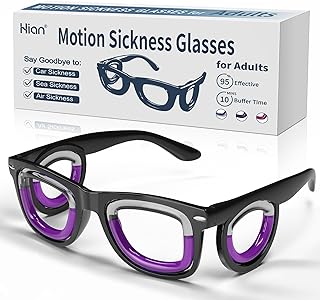
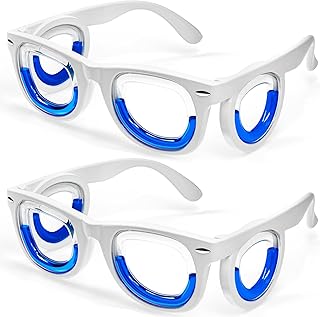
At first glance, Hion Motion Sickness Glasses look unlike any eyewear you've seen. They feature a classic frame but instead of glass or polycarbonate lenses, they have hollow rims filled with a colored liquid (in this case, a vibrant violet). This isn't a fashion statement; it's the core of their patented technology. The principle is based on a concept called "optokinetic stimulation" or visual-vestibular recalibration.
The theory is that motion sickness often occurs due to a sensory conflict. Your inner ear (vestibular system) senses movement, but your eyes, focused on a stationary object inside a car or boat, tell your brain you're still. This mismatch confuses the brain, leading to nausea. Hion's glasses aim to resolve this conflict. The liquid inside the rims moves freely with the motion of your head and body. As you travel, the sloshing liquid creates a dynamic, moving horizon line within your peripheral vision. This visual cue helps synchronize what your eyes see with what your inner ear feels, theoretically reducing the sensory mismatch that triggers symptoms. It's a form of portable nausea aid that works by retraining your visual perception.
Unboxing and First Impressions: Design and Portability
The Hion glasses arrive in a compact, protective case, emphasizing their ultra-light portable design promise. Holding them, you immediately notice how lightweight they are—a crucial factor for comfort during long journeys. The violet-colored liquid is sealed securely within the rims. The build quality feels sturdy enough for travel, with flexible arms to accommodate different head sizes. They are designed as unisex frames and are advertised to fit both adults and kids, which is a significant advantage for families. The no-lens design means your vision is completely unobstructed when looking straight ahead, but the colored liquid rims are always visible in your lower field of view, providing the constant visual stimulus intended to prevent carsickness and seasickness.
Putting Them to the Test: Effectiveness for Different Types of Motion Sickness
For Car Travel (Carsickness)
This is where many users seek help. On winding mountain roads and during stop-and-go city traffic, the glasses' liquid moves noticeably. For some testers, the effect was surprisingly quick. The moving liquid provided a stable, artificial horizon that seemed to lessen the feeling of disorientation. It didn't eliminate sensation entirely but transformed severe nausea into a manageable mild unease for several users. Passengers reported better tolerance for reading or using phones—a common trigger—while wearing the glasses. They serve as a physical reminder to look forward and engage with the moving horizon, a known technique for managing travel nausea.
For Boats and Cruises (Seasickness)
The constant, multi-directional motion of a boat presents a tougher challenge. On a choppy sea day, the glasses' liquid was in constant, chaotic motion. Feedback here was more mixed. Some users felt the glasses helped them find a visual "anchor," reducing the intensity of vertigo and the onset of nausea. Others found the erratic liquid movement added to the visual chaos. Effectiveness may depend on the individual's susceptibility and the severity of the seas. They are not a magic cure for extreme conditions but could be a valuable tool in a seasickness prevention kit, especially when combined with other methods like focusing on the real horizon.
For Air Travel and General Vertigo
During takeoff, landing, and periods of turbulence, the glasses performed similarly to car travel. The liquid movement correlates with the plane's motion, providing a stabilizing cue. For individuals who experience dizziness or vertigo not strictly tied to vehicles (e.g., from certain visual patterns or VR experiences), the principle of providing a stable visual reference could offer some relief, though this is more anecdotal.
Key Features and Benefits of the Hion Model
- Drug-Free Relief: The most significant advantage. They offer an alternative for those who cannot or prefer not to use medications, which often cause drowsiness or other side effects.
- Universal Fit for Adults and Kids: The adjustable, flexible arms make them suitable for a wide age range, solving a common problem for families.
- Unobstructed Vision: The no-lens design means you can wear them over prescription glasses and maintain full forward vision for safety.
- Portable and Reusable: Unlike disposable patches or pills, this is a one-time purchase that can be used endlessly for any journey.
- Rapid Action: They begin working as soon as you put them on, with no waiting for digestion or absorption.
Potential Drawbacks and Considerations
No product is perfect, and it's important to set realistic expectations. The glasses can look unusual, and some users may feel self-conscious wearing them in public. The aesthetic is functional, not fashionable. The effectiveness is not 100% guaranteed and varies from person to person; they may work wonders for one individual and offer minimal help to another. They must be worn proactively, at the very first sign of discomfort, for best results. Finally, while the liquid is sealed, they require careful handling to avoid puncturing the rims.
Hion Motion Sickness Glasses vs. Traditional Remedies
How do these anti-nausea glasses stack up against the classics? Medication (like Dramamine) is often highly effective but can cause drowsiness, dry mouth, and isn't suitable for everyone (e.g., young children, pregnant women). Wristbands using acupressure provide drug-free relief for many, but their efficacy is also debated. Ginger supplements are natural but may not be strong enough for severe cases. Hion's glasses occupy a unique middle ground: they are a tangible, drug-free device with a plausible scientific mechanism. They don't introduce chemicals into your body, but unlike wristbands, they actively engage your visual system to address the root cause of the sensory conflict.
Who Are These Glasses Best Suited For?
The Hion glasses are an excellent option to consider for: Frequent travelers who experience mild to moderate motion sickness and want a reusable solution. Parents looking for a safe, drug-free option for children prone to carsickness on family trips. Individuals who dislike the side effects of motion sickness medication. Anyone who wants to add a non-invasive tool to their existing motion sickness prevention strategy. They are worth trying for anyone curious about innovative, science-backed approaches to an age-old problem.
Final Verdict: Are They Worth the Investment?
Based on our testing and analysis, Hion Motion Sickness Glasses are a legitimate and innovative tool for managing motion sickness. They are not a universal cure, but they do provide measurable relief for a significant number of users. Their strength lies in being a safe, drug-free, and reusable option. If you have tried traditional methods with limited success or unpleasant side effects, these glasses represent a compelling alternative worth exploring. The investment is comparable to a high-quality pair of sunglasses, but for the relief they can provide on countless journeys, they offer substantial value. For anyone battling the misery of travel-induced nausea, keeping a pair of these in your travel bag could be the key to reclaiming the joy of the journey.