For thousands of years, across continents and cultures, a simple yet profound game of seeds and pits has captivated minds. This game is Mancala, one of the oldest known board games in the world. More than just a pastime, Mancala represents a fascinating intersection of mathematics, strategy, and social tradition. Whether you're a curious newcomer or a seasoned player looking to refine your tactics, this comprehensive guide will delve into the rich history, clear rules, and deep strategic layers that make Mancala an enduring classic. Its universal appeal lies in its elegant simplicity paired with surprising strategic depth, a combination that has ensured its survival from ancient marketplaces to modern living rooms.
The Ancient History and Global Journey of Mancala
The origins of Mancala are shrouded in the mists of antiquity, with archaeological evidence suggesting it was played in Africa and the Middle East as early as 6000 BCE. The name "Mancala" itself is derived from the Arabic word "naqala," meaning "to move." It functioned not only as entertainment but also as a tool for teaching calculation and strategic thinking. As trade routes expanded, so did the game, evolving into hundreds of regional variants known by different names such as Oware (Ghana), Bao (East Africa), and Congkak (Southeast Asia). Each culture imprinted its own rules and board designs, from elaborate wooden carvings to simple holes dug in the earth. This global journey highlights Mancala's role as a shared human heritage, a common thread in the fabric of diverse societies. Exploring these variants offers a unique window into the cultures that nurtured them.
Understanding the Mancala Board and Basic Setup
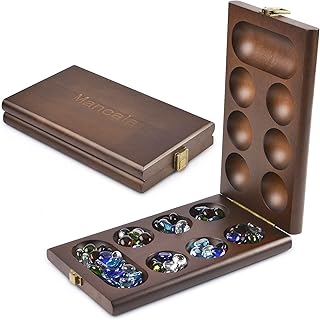
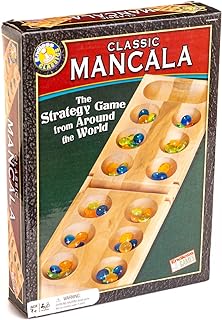
At its core, the Mancala board is elegantly simple. It consists of two rows of six small pits (or "houses") and two larger pits at each end called "stores" or "Mancalas." The game begins with an equal distribution of seeds (or stones) – typically four in each of the twelve small pits, leaving the two stores empty. Players sit opposite each other, with one row of six pits and the right-hand store belonging to each player. The objective is straightforward: capture more seeds in your store than your opponent. This simple setup belies the complex decision-making that follows each move. Familiarizing yourself with the board is the first step toward mastering the game's strategic potential. The tactile nature of moving the seeds from pit to pit is a key part of the Mancala experience, connecting players to the game's ancient roots.
Step-by-Step: The Fundamental Rules of Play
The turn-based gameplay of Mancala is governed by clear, consistent rules. On your turn, you pick up all the seeds from one of the six pits on your side of the board. Moving counter-clockwise, you then "sow" these seeds by placing one in each subsequent pit, including your own store but skipping your opponent's store. This sowing mechanism is the heart of the game. If your last seed lands in your own store, you get an extra turn—a crucial rule for setting up combos. If your last seed lands in an empty pit on your side, you capture that seed and all seeds in the pit directly opposite on your opponent's side, placing them all in your store. The game ends when all six pits on one player's side are empty. The player with the most seeds in their store wins. Mastering these basic rules is essential before diving into advanced Mancala strategy.
Key Gameplay Concepts: Sowing, Capturing, and Turns
To develop a winning strategy, you must internalize three core concepts. First, sowing is your primary action; choosing which pit to sow from dictates the entire flow of the round. Second, capturing is how you gain a significant advantage. Setting up a move where your last seed lands in an empty pit on your side is a primary tactical goal, as it allows you to seize your opponent's resources. Third, understanding turn sequence is vital. Earning an extra turn by landing your last seed in your store can be game-changing, allowing you to execute a planned sequence of moves uninterrupted. These interconnected mechanics form the strategic skeleton of the game. Analyzing the board before each move to optimize for these outcomes separates casual players from true strategists.
Developing a Winning Mancala Strategy
Moving beyond basic rules, competitive play in Mancala demands foresight and calculation. Effective strategy revolves around board control and resource denial. A fundamental principle is to avoid setting up easy captures for your opponent. Don't leave single seeds in your pits if the opposite pit on your opponent's side is empty, as this invites a capture. Instead, focus on building multi-seed pits on your side to enable powerful sowing moves. Prioritize moves that grant you extra turns, as consecutive moves allow you to execute complex plans. In the mid-game, try to maintain at least one empty pit on your side to facilitate future captures. Think several moves ahead, anticipating how your sowing will change the board's landscape and what opportunities it will create for both you and your opponent. This level of strategic planning is what makes Mancala a deeply engaging mental exercise.
Advanced Tactics: The Offensive and Defensive Balance
As you progress, you'll learn to balance offensive and defensive postures. An offensive tactic involves aggressively targeting captures and extra turns to build an early lead. This can pressure your opponent into a defensive, reactive style of play. A defensive tactic focuses on consolidating your position, minimizing risks, and denying your opponent capturing opportunities. This often involves keeping your pits stocked with multiple seeds and avoiding moves that leave vulnerable single seeds. The most skilled players fluidly switch between these modes based on the board state. They also master "counting," the ability to quickly calculate the outcome of a sowing sequence to see if it leads to a capture or an extra turn. Practicing these advanced tactics will significantly elevate your Mancala game.
The Cognitive and Educational Benefits of Playing Mancala
Mancala is far more than a simple game; it's a powerful cognitive tool. Regularly playing strengthens essential mental skills. It enhances mathematical thinking through constant counting and calculation of seed distribution. It develops strategic planning and foresight, as players must think multiple moves ahead and consider their opponent's potential responses. The game also improves pattern recognition and problem-solving abilities. For these reasons, Mancala is widely used in educational settings to teach children basic arithmetic, logical reasoning, and patience. Its non-violent, abstract nature makes it an excellent family game that promotes healthy competition and critical thinking. Engaging with the Mancala board is a workout for the brain, offering benefits that extend well beyond the game itself.
Bringing Mancala into Your Home: Choosing Your Set
Today, enjoying Mancala is easier than ever. When selecting a set, consider both aesthetics and functionality. Traditional wooden boards offer a classic, tactile feel and often feature beautiful craftsmanship. Modern sets can be made from materials like resin, glass, or even folding travel boards for portability. The playing pieces, or "seeds," can be stones, glass beads, or carved tokens. Choose a set with pits that are deep enough to hold the seeds comfortably and a board that feels stable. The most important factor is that the set invites you to play. Owning a physical Mancala board connects you to the game's long history and provides a tangible focus for strategy and social interaction, making each game a special event.
Conclusion: The Timeless Appeal of a Strategic Classic
From its ancient origins to its place on modern tabletops, Mancala has endured because it perfectly marries simple mechanics with infinite strategic complexity. It is a game that is easy to learn but challenging to master, offering a satisfying depth that rewards repeated play. It fosters cognitive skills, connects us to a shared human past, and provides a timeless framework for friendly competition. Whether you're playing a quick game with a child or a thoughtful match with a fellow enthusiast, Mancala offers a unique blend of calm focus and strategic excitement. We encourage you to set up a board, start sowing seeds, and discover for yourself why this ancient game of pits and captures continues to fascinate players around the world. Dive deeper into the world of strategy games by exploring our Mancala collection and resources.