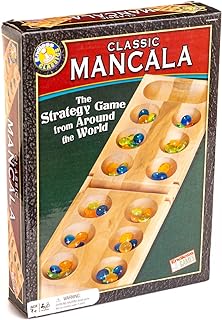
For thousands of years, across continents and cultures, people have been captivated by the simple yet profound strategy of Mancala. More than just moving colorful stones, this ancient game is a test of foresight, calculation, and tactical thinking. Today, it remains a beloved classic, offering a perfect blend of easy-to-learn rules and deep strategic possibilities, making it an ideal centerpiece for family game night, a thoughtful gift, or a portable pastime. This guide will explore everything that makes Mancala a timeless treasure.
The Ancient Roots of a Modern Classic
The story of Mancala is a journey through human history. With origins tracing back over 3,000 years to ancient Africa and the Middle East, it is arguably one of the oldest known board games still played today. The name "Mancala" itself comes from the Arabic word "naqala," meaning "to move." It wasn't a single game but a family of games played with seeds, beans, or stones on boards carved into wood, stone, or even dug into the earth. This rich heritage is a testament to the game's universal appeal—its rules are intuitive, its materials are simple, but the strategic possibilities are endless. Playing Mancala connects you to a tradition of thinkers and strategists from millennia past.
How to Play Mancala: Rules Made Simple
At its core, Mancala is a two-player game of sowing and capturing. A standard board has two rows of six small pits, with a larger "store" or "mancala" at each end for each player.
- Setup: Place four stones (or seeds) in each of the 12 small pits.
- Objective: Capture more stones in your store than your opponent.
- On Your Turn: Pick up all the stones from one of the six pits on your side of the board. Moving counter-clockwise, "sow" one stone into each subsequent pit, including your own store but skipping your opponent's store.
- Capturing: If your last sown stone lands in an empty pit on your side, you capture that stone plus all stones in the pit directly opposite on your opponent's side, placing them all in your store.
- Game End: The game ends when all six pits on one side are empty. The player with the most stones in their store wins.
These simple rules create a dynamic battlefield where every move can set up a future capture or block your opponent's plans.
Beyond the Basics: Essential Mancala Strategies for Winning
Moving from novice to skilled player requires understanding key strategic concepts. Here are foundational strategies to elevate your strategy game:
- Control the Tempo: Aim for "extra turns." If your last stone lands in your own store, you get another turn. Planning moves to achieve this can create devastating combos.
- Master the Capture: Don't just capture when you can; plan for it. Set up empty pits on your side to enable captures on future turns, turning your opponent's bounty into your own.
- Think in Multiples: Since you sow one stone per pit, planning moves so that your stones land in pits with specific counts (like setting a pit to have one stone for an easy capture next turn) is crucial.
- Defensive Play: Sometimes, the best move is to deny your opponent opportunities. Avoid leaving single stones in your pits opposite your opponent's empty pits, as this sets them up for a capture.
Practicing these tactics transforms Mancala from a casual pastime into a deeply engaging mental duel.
Choosing Your Mancala Set: Why Quality Matters
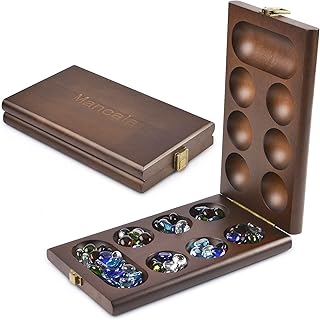
While you can play with beans and an egg carton, a dedicated wooden board game set enhances the experience immensely. A well-crafted set is durable, aesthetically pleasing, and turns gameplay into a ritual. Key features to look for include a smooth, folding board for easy storage, deep pits to prevent stone spillage, and high-quality, tactile playing pieces. The AMEROUS Wooden Mancala Board Game Set exemplifies these qualities with its upgraded larger size, ensuring comfortable play, and its inclusion of 72+8 bonus multi-color glass stones that are satisfying to handle. Its folding design and gift-ready packaging also make it a truly portable game and an excellent gift for adults and families alike.
Mancala: More Than Just a Game
The benefits of playing Mancala extend far beyond the board. It's a powerful educational tool that teaches children critical thinking, basic math (counting and planning), and turn-taking. As a family game, it bridges generations with rules simple enough for a young child yet deep enough to challenge a grandparent. It fosters patience, strategic foresight, and healthy competition without relying on screens or batteries. In our fast-paced digital world, the tactile, face-to-face interaction of a wooden board game like Mancala provides a valuable opportunity for connection and mindful play.
Your Next Move: Bringing Mancala Home
Whether you're rediscovering a childhood favorite or encountering this strategic gem for the first time, Mancala offers timeless appeal. Its blend of history, simple mechanics, and deep strategy makes it a standout in any game collection. To fully appreciate the experience, investing in a quality set designed for play and preservation is key. Explore the craftsmanship and thoughtful design of the AMEROUS Wooden Mancala Set, and get ready to sow, capture, and outthink your way to countless hours of engaging family game night fun.