For centuries, the gentle clatter of glass beads on a wooden board has signaled a battle of wits, strategy, and fun. Mancala, one of the world's oldest known games, continues to captivate players of all ages. More than just a pastime, it's a portable gym for your brain, fostering critical thinking, planning, and social connection. Whether you're looking for the perfect centerpiece for your next family game night or a compact challenge for your travels, understanding Mancala is the first step to unlocking its enduring appeal.
This comprehensive guide is designed to take you from curious beginner to confident player. We'll demystify the setup, break down the simple yet deep rules, and arm you with strategic insights to elevate your game. By the end, you'll not only know how to play but also appreciate why this classic table game has stood the test of time and how a quality set, like the Regal Games Mancala Board Game, can enhance your experience.
What is Mancala? A Journey Through History
Mancala isn't a single game but a family of 2 player games played with seeds, stones, or beads on a board with rows of pits. Its origins are ancient, with evidence suggesting it was played in Africa and Asia over a thousand years ago. The name "Mancala" comes from the Arabic word "naqala," meaning "to move," which perfectly describes the game's core mechanic. Different cultures developed their own variations, but the fundamental principles of sowing and capturing remain constant, making it a truly global classic.
Setting Up Your Mancala Board Game
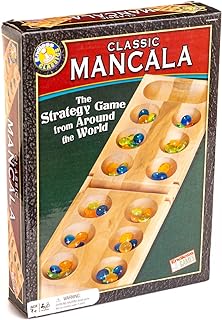
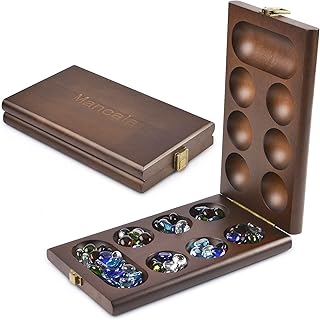
Before the strategy begins, you need to set the stage. A standard Mancala board has two rows of six small pits (or "houses") for each player, with a larger scoring pit (the "Mancala" or "store") at each end. If you have the Regal Games set, you'll appreciate its sturdy wooden construction and the satisfying weight of the 48 colorful glass beads. To start, place four beads in each of the 12 small pits. Each player sits before a row of six pits, with their Mancala store to their right. This symmetrical setup is the blank canvas for your strategic masterpiece.
How to Play Mancala: The Basic Rules Explained
The beauty of Mancala lies in its easy-to-learn, hard-to-master rules. Players take turns picking up all the beads from one of their six pits. Moving counter-clockwise, they "sow" these beads, placing one in each subsequent pit, including their own Mancala store (but skipping their opponent's store). If your last sown bead lands in your own empty pit, you capture that bead and all beads in the pit directly opposite on your opponent's side, placing them all in your Mancala. The game ends when all six pits on one side are empty. The player with the most beads in their Mancala store wins. It's a simple dance of distribution and capture that creates infinite strategic possibilities.
Top 5 Mancala Strategies for Beginners and Beyond
Moving beads randomly is fun, but planning your moves is where the real satisfaction lies. Here are key strategies to transform your game:
- Control Your Rightmost Pit: The pit closest to your Mancala is a goldmine. Landing a bead here scores immediately. Try to set up moves that end in this pit.
- Set Up Multi-Lap Moves: If you pick up enough beads from a pit to circle the board and land back in your starting pit (which is now empty), you get another turn. This "free turn" is a powerful offensive tool.
- Prioritize Captures: Always scan the board before your move. Can you land in an empty pit on your side to trigger a capture? A successful capture can swing the game dramatically.
- Deny Your Opponent: Sometimes the best offense is a good defense. Avoid leaving single beads in your pits opposite your opponent's empty pits, as this sets them up for an easy capture.
- Play the Long Game: Don't just focus on immediate captures. Sometimes, it's better to sow beads in a way that sets up a devastating multi-turn sequence a few moves later.
Why Choose a Quality Mancala Set? The Regal Games Advantage
While you can play Mancala with an egg carton and dried beans, a dedicated set elevates the experience. A well-crafted board like the Regal Games Mancala provides durability, aesthetic pleasure, and practical features. Its wooden board offers a solid, non-slip surface, and the glass mancala beads are smooth, colorful, and satisfying to handle. For families and travelers, the foldable game board design is a game-changer, making it easy to pack for vacations, picnics, or visits to friends' houses. Investing in a good set signals that this is more than a toy; it's an heirloom-quality game meant for years of shared memories.
Mancala for Family Game Night & On-the-Go Fun
In an age of digital screens, Mancala offers a tangible, interactive alternative that brings people together. It's the ideal candidate for family game night because it bridges generations—the rules are simple enough for an 8-year-old to grasp, yet the strategy is deep enough to engage teens and adults. It teaches children counting, turn-taking, and strategic thinking in a fun, pressure-free environment. Furthermore, its compact size and lack of loose cards or many pieces make it one of the best travel games available. It provides endless entertainment during long car rides, flights, or rainy days at a cabin without requiring batteries or an internet connection.
Common Mistakes to Avoid When Learning Mancala
Even seasoned players can fall into traps. Be mindful of these common pitfalls:
- Playing Too Aggressively Early: Emptying your side quickly to end the game can backfire if your opponent has a well-stocked Mancala. Sometimes, a slower, more controlled game is better.
- Forgetting to Survey the Entire Board: Don't just look at your own pits. Before you move, always check your opponent's side to see what captures you might be setting up for them.
- Ignoring the Endgame: The final moves are critical. Plan ahead for when the pits start to empty. Often, the player who forces the game to end controls which remaining beads get counted.
- Underestimating the Power of Defense: New players often focus solely on their own scoring opportunities. Learning to block your opponent's potential captures is a hallmark of an intermediate player.
Conclusion: Your Next Move Towards Timeless Fun
Mancala is more than a game; it's a connection to history, a tool for cognitive development, and a catalyst for social bonding. Its elegant simplicity masks a world of strategic depth, ensuring it never grows old. Whether you're introducing it to your children, challenging a friend, or looking for a thoughtful solo puzzle, this wooden board game delivers. By mastering the rules and strategies outlined here, you're not just learning to play—you're joining a millennia-old tradition of playful competition. So, gather the glass beads, set up your board, and make your first move into the captivating world of Mancala. The journey from novice to master is a rewarding one, filled with countless moments of fun and discovery.