For thousands of years, people have been captivated by the simple yet profound challenge of Mancala. This ancient board game, often called the world's oldest, continues to enchant players of all ages with its elegant mechanics and deep strategic possibilities. More than just moving stones around a board, Mancala is a test of foresight, calculation, and tactical planning. Whether you're a complete beginner looking to learn the basics or a seasoned player aiming to refine your strategy, this guide will walk you through everything you need to know about this timeless classic game.
The beauty of Mancala lies in its accessibility. The core components are minimal: a board with a series of pits and a collection of stones or seeds. This simplicity makes it easy to learn but incredibly difficult to master, a hallmark of the greatest strategy games. It's a perfect two-player game that fosters quiet concentration and friendly competition, making it an ideal centerpiece for a family game night. In this comprehensive guide, we'll explore the game's fascinating origins, break down the standard rules, delve into advanced tactics, and examine why modern sets, like the well-crafted Pressman Mancala board game, keep this ancient tradition alive and thriving in homes today.
A Journey Through Time: The History of Mancala
Mancala's history is as rich and layered as the game itself. Archaeological evidence suggests that versions of the game were played in ancient Africa and the Middle East over 3,000 years ago. The name "Mancala" is derived from the Arabic word "naqala," meaning "to move," reflecting the core action of the gameplay. It wasn't merely a pastime; it was often used as a tool for teaching mathematical concepts and strategic thinking. Different cultures developed their own variations, with unique board designs and rule sets, but the fundamental principle of sowing and capturing seeds remained constant. This global journey from ancient pits in the earth to beautifully crafted wooden boards is a testament to the game's universal and enduring appeal.
Setting Up Your Mancala Board
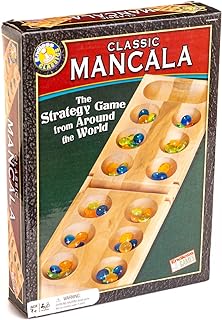
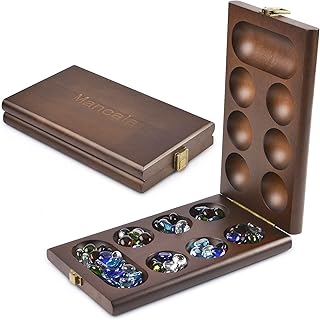
Before the strategic battle begins, you need to set up the board. A standard Mancala board has two rows of six small pits, called "houses," and two larger pits at each end, called "stores" or "Mancalas." Each player controls the six houses on their side of the board and the store to their right. To start, place four stones (or seeds) in each of the twelve small houses. The two large stores begin empty. Players sit facing each other with the board between them. High-quality sets enhance this experience significantly. For instance, the Pressman set includes 48 durable glass stones and a handsome wooden board with a hinged design for easy storage, making setup and cleanup a seamless part of the fun.
How to Play Mancala: The Basic Rules Explained
The objective of Mancala is simple: capture more stones in your store than your opponent. Players take turns. On your turn, you pick up all the stones from one of the six houses on your side of the board. Moving counter-clockwise, you then "sow" these stones by placing one in each subsequent pit, including your own store but skipping your opponent's store. This is the crucial sowing mechanic that drives the entire game.
Capturing is where strategy comes into play. If the last stone you drop lands in an empty house on your side, you capture that stone and all the stones in the house directly opposite on your opponent's side. All these captured stones go into your store. The game ends when all six houses on one side of the board are empty. The player who still has stones on their side gets to add those remaining stones to their store. Finally, both players count the stones in their stores. The player with the most stones wins!
From Beginner to Master: Essential Mancala Strategies
Winning at Mancala requires more than just understanding the rules; it demands foresight and planning. Here are key strategies to elevate your game:
- Control the Tempo: Aim for "extra turns." If the last stone you sow lands in your own store, you get to take another turn immediately. Planning moves to achieve this can give you a powerful advantage.
- Set Up Captures: Always be looking ahead. Position your stones so that your final sowing lands in an empty pit on your side, enabling you to capture stones from the opponent's opposite house.
- Deny Your Opponent: Sometimes, the best move is defensive. Avoid leaving a single stone in a house on your side, as this makes it an easy target for your opponent to capture on their next turn if they can land in the empty space opposite.
- Play the Right Side: In the early and mid-game, focus on moves that start from pits closer to your store. This often allows for more strategic flexibility and sets up potential extra turns.
Mastering these tactics transforms Mancala from a simple game of chance into a deep and rewarding strategy game. Practice is key, and playing on a well-made board with smooth glass stones makes the tactical experience all the more enjoyable.
Why Mancala is the Perfect Family Game
In an age of digital screens and fast-paced entertainment, Mancala offers a refreshing analog experience. It's a quintessential family game for several compelling reasons. First, its rules are easy enough for a six-year-old to grasp, yet the strategic depth can challenge teenagers and adults. This creates a level playing field where different generations can compete and connect. Second, it encourages critical thinking, basic math skills (counting and planning), and patience. Third, as a quiet, turn-based two-player game, it fosters conversation and friendly rivalry without the overwhelming noise of larger party games.
Investing in a durable set like the Pressman Mancala board game ensures this classic game becomes a household staple. The satisfying click of glass stones and the feel of a solid wooden board add a tactile pleasure that digital games cannot replicate, making each game a memorable event.
Choosing Your Mancala Set: What to Look For
While you can play Mancala with an egg carton and dried beans, a dedicated set enhances the experience. When selecting a set, consider durability, aesthetics, and portability. A wooden board is classic and sturdy, often featuring a hinged design that turns into its own storage case. The playing pieces should be uniform, pleasant to handle, and not too small to lose. Glass stones or gemstones are popular for their weight and visual appeal. The Pressman Mancala set is an excellent example, combining a functional hinged wooden board with 48 vibrant glass stones, creating a product that is both a game and a beautiful object for your home.
Conclusion: A Game for the Ages
Mancala is more than just a board game; it's a link to our shared human history and a tool for sharpening the mind. Its perfect balance of simplicity and strategic depth secures its place as a beloved classic game. Whether you're seeking a thoughtful two-player game, a educational family game, or simply a beautiful object that invites play, Mancala delivers on all fronts. Gathering around a board like the Pressman set is an invitation to slow down, think ahead, and enjoy the timeless pleasure of a game well played. Why not start your own Mancala tradition today?